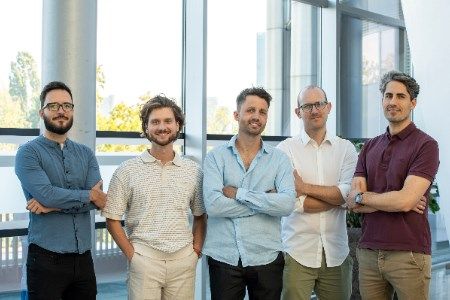
“Our most recent investment in innovative technologies in France demonstrates Heidelberg Materials’ strong commitment to decarbonise our products. The launch of the transformative project in Bussac-Forêt will be supported by a favourable administrative and regulatory environment”, said Dr Dominik von Achten, Chairman of the Managing Board: “The project will reduce the site's CO2 emissions by up to 20% and thus have a significant positive impact on Heidelberg Materials’ carbon footprint in France.”
Dr Nicola Kimm, Chief Sustainability Officer and member of the Managing Board, added: “In Bussac-Forêt, we are investing in a technology with great potential. It will allow us to significantly expand the range of low-carbon products. Using calcined clay as clinker substitute is an important measure to reduce the carbon footprint of cement and concrete. In principle, a CO2 reduction of up to 40% is possible when substituting cement clinker with calcined clay”.
The company is currently piloting calcined clay technology in Ghana, where the world's largest flash calciner is currently being built with a capacity of more than 400 000 tpy. In principle, a CO2 reduction of up to 40% is possible when substituting cement clinker with calcined clay.
This latest investment is in addition to the €46 million already committed by Heidelberg Materials to decarbonise the Bussac-Forêt cement plant by increasing the alternative fuel rate from 30% to 80%. The project is financially supported by the Ecological Transition Agency as part of the France Recovery programme, and benefits from support from the Nouvelle-Aquitaine region. It is fully in line with Heidelberg Materials’ climate strategy, which has set targets to reduce specific net CO2 emissions per tonne of cement by 47% by 2030 compared to 1990. The Group aims to achieve net zero carbon emissions by 2050 at the latest.