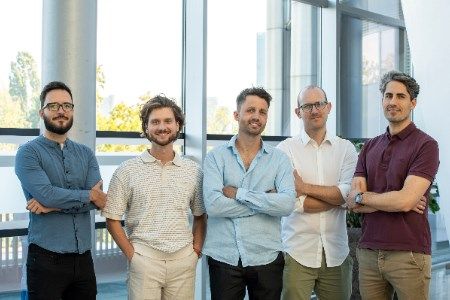
Dr. Ralph Kleinschmidt, Head of Technology, Innovation and Sustainability at thyssenkrupp Uhde: "Amine scrubbing is already commonly used to recover CO2 from process gases or exhaust gases. Now, we are developing the technology further and optimising it for the cement industry. Additional applications for capturing CO2 direct at source, such as in waste incineration plants, are also possible."
Arne Stecher, Head of Decarbonization at Holcim Germany: "Carbon capture will be a must for cement plants in the near future. That is why we are testing different processes to find the best carbon capture technology. Carbon capture by means of amine scrubbing is a promising solution. I am pleased that, together with our partners, we can test the use of this innovative process in the cement industry.”
Prof. Dr.-Ing. Jens-Uwe Repke, Chair of Process Dynamics and Operations Group at TU Berlin: "Developing innovative carbon capture technology for gas treating and improving the efficiency, environmental compatibility, and sustainability of existing carbon capture processes, as well as putting them into practice, is an urgent and crucial task that makes a direct contribution to climate protection. These goals can only be achieved if industry cooperates closely with research facilities like universities."
The performance and efficiency of this equipment is being tested using real exhaust gas at the cement plant located in Beckum, Germany. This is paving the way for commercial use. Various possibilities for using the captured CO2 are also being examined, for example methanol or sustainable fuels. With this process, the partners are seeking to make a contribution to the reduction of greenhouse gases, especially in existing cement production plants. These can then be retrofitted with equipment for capturing CO2 from the process gas without further adapting the production process.